

From assessment to practical action: developing a Digital Transformation Roadmap

By Anthony Carty, E-DATA Project Coordinator, Atlantic Technological University
Through E-DATA, I have been having valuable conversations with SMEs about their digital development. These discussions bring together business ambitions, everyday operational challenges and the practical considerations that determine whether a proposed change can work.
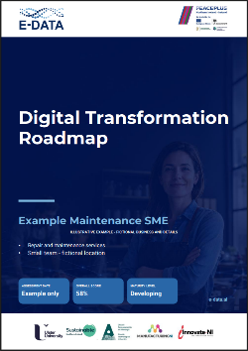
The SME Digital Readiness Assessment (SMEDRA) and Digital Transformation Roadmap provide a structure for that conversation. The accompanying extracts use a fictional maintenance business to illustrate the process, while retaining the format of the documents businesses receive. The business details, scores and proposed actions are illustrative.
SMEDRA establishes a starting point across ten connected areas of digital readiness. Its report helps identify relative strengths and areas that may need attention. The discussion then considers those findings alongside the business’s objectives, existing systems, staff capabilities and available time.
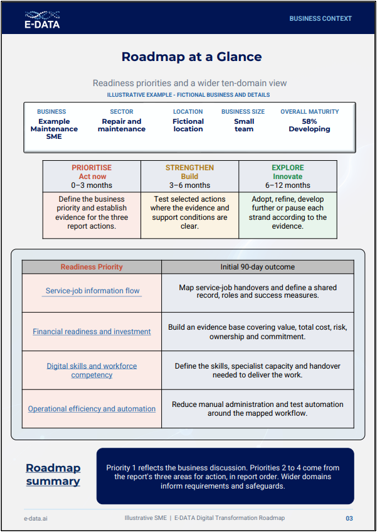
The Roadmap at a Glance shows how this business priority connects with financial readiness, digital skills and operational efficiency. The business needs to consider the cost and value of a change, who will take responsibility for it and what support colleagues will need. These considerations help shape a realistic approach.
In our fictional example, the business wants to improve how service-job information moves from enquiry to completion. Details held across emails, paper notes and spreadsheets can make handovers difficult. The practical starting point is to understand that process and define what a shared job record needs to contain.
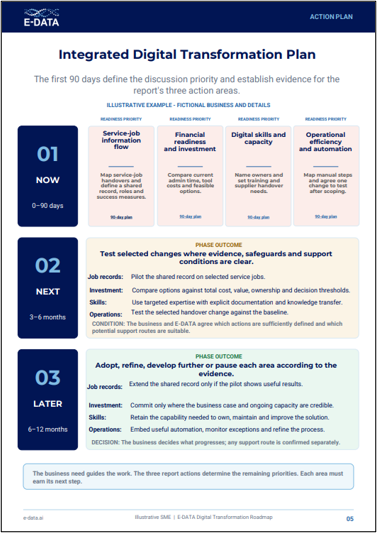
The Integrated Digital Transformation Plan then sets out a sequence:
- NOW: map the handovers, establish a baseline and define the shared record, responsibilities and success measures.
- NOW: map the handovers, establish a baseline and define the shared record, responsibilities and success measures.
- LATER: use that evidence to decide whether to adopt, refine, extend or pause the change.
For me, an important part of this work is helping businesses make those connections. A question about a digital tool can lead to a useful discussion about information, responsibilities, investment and how colleagues work together.
The Roadmap records practical next steps and identifies potentially relevant E-DATA support. Any further support is considered through scoping and confirmation of suitability, eligibility and availability.
Find out more about SMEDRA and the Digital Transformation Roadmap:
https://e-data.ai/digitalreadinessassessment/